Use case 07 · Risk
Internal audit planning
Synthesize risk signals, prior findings, control evidence, and business change into a reviewable audit plan.
Bradesco
Published by Microsoft
Audit of the future: Bradesco increases efficiency by 65% with Microsoft Azure
The case describes an internal-audit assistant created by the bank's audit team to support planning and governance.
- Bradesco reports a 65% increase in audit-planning efficiency.
- The bank states that the system strengthened governance while allowing the team to focus on strategic value.
Workflow at a glance
See the orchestration path before exploring the operating detail.
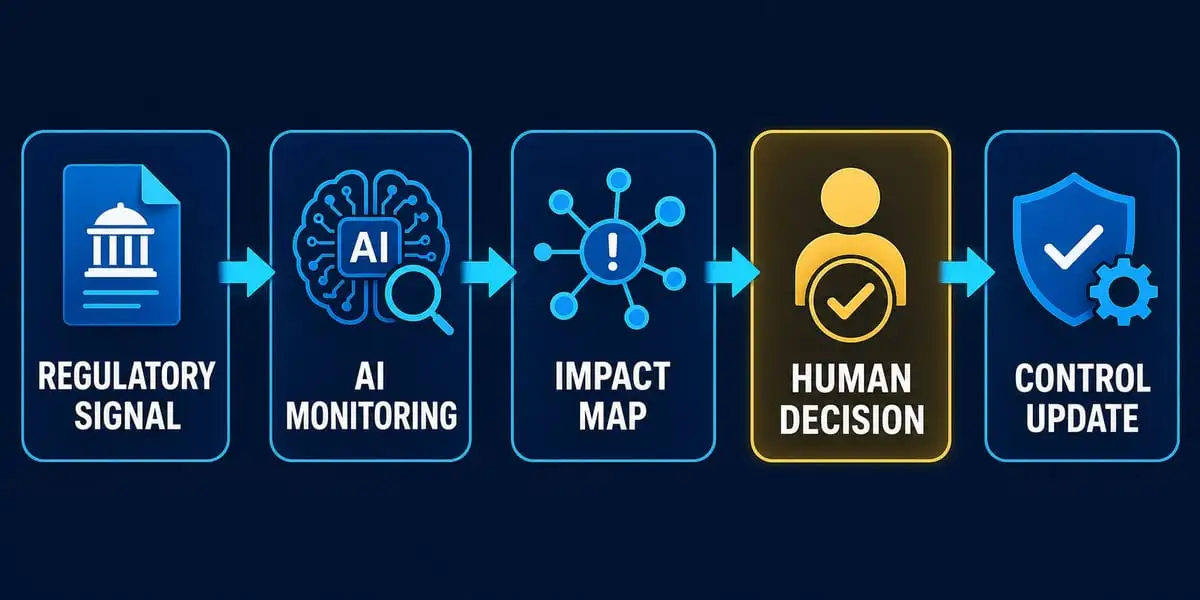
This domain view shows where AI accelerates the work and where accountable human judgment remains in command.
The business problem
Orchestration redesigns the whole operating loop.
Audit planning requires a wide view of prior findings, risk assessments, process change, incidents, regulatory themes, and management concerns. Much of the effort is spent gathering and summarizing before professional judgment begins.
AI orchestration can prepare the risk narrative, propose scope options, identify missing evidence, and maintain traceability. Auditors determine materiality, independence, scope, procedures, findings, and communication.
Orchestration corridor
How the work moves from signal to accountable outcome.
Every step has a defined input, intelligence task, action, and handoff. This is what separates an operating system from an isolated prompt.
-
01
Collect risk signals
Bring together plans, findings, incidents, changes, and management concerns.
-
02
Build the risk picture
Cluster themes, identify dependencies, and surface contradictory evidence.
-
03
Propose scope
Draft objectives, boundaries, hypotheses, and required expertise.
-
04
Challenge and approve
Auditors test assumptions, independence, materiality, and coverage.
-
05
Maintain the trail
Link the final plan and later adjustments to their supporting evidence.
Ecosystem command map
The capability lives between systems, not inside one model.
The four quadrants show the assets that must be coordinated. Select any quadrant to emphasize its role in the operating system.
Signals
What enters the system
- Risk register and prior audits
- Incidents and control testing
- Strategy, change, and third-party data
Intelligence
What AI organizes
- Theme synthesis
- Coverage and dependency analysis
- Scope drafting
Actions
What the workflow moves
- Prepare risk brief
- Propose audit scope
- Identify evidence gaps
Human command
Where authority remains
- Audit leadership prioritizes
- Engagement lead approves scope
- Committee receives transparent rationale
Value and control instrument panel
Measure the business result and the integrity of the route.
The bars are not performance claims. They show the measurement sequence: establish the current baseline, agree a pilot threshold, and verify the observed result.
Planning effort
Hours from evidence collection to approved scope
Establish baseline → set pilot threshold → verify outcomeCoverage quality
Material risks linked to planned procedures
Establish baseline → set pilot threshold → verify outcomeLate scope change
Unplanned expansion caused by missed evidence
Establish baseline → set pilot threshold → verify outcomeAuditor acceptance
Draft content retained after professional review
Establish baseline → set pilot threshold → verify outcome90-day implementation route
Move from reconnaissance to controlled scale.
Select a phase to inspect its executive decision gate.
Phase 1
Recon
Use one audit area with a strong prior-year evidence base and experienced reviewers.
- Executive owner
- Chief Audit Executive
- Decision gate
- Problem and baseline confirmed
Phase 2
Pilot
Generate planning briefs and scope alternatives for side-by-side review.
- Executive owner
- Chief Audit Executive
- Decision gate
- Value and control thresholds met
Phase 3
Scale
Extend to portfolio planning after the audit methodology formally adopts the controls.
- Executive owner
- Chief Audit Executive
- Decision gate
- Operating owner accepts scale
Source and governance discipline
Evidence first. Claims qualified. Accountability designed in.
This operating play is an independent synthesis by Dr. Alejandro Canonero, DBA. It translates a documented implementation into a vendor-neutral business design and applies the War of the Ecosystems perspective. It does not imply endorsement by the source organization.
Executive working session
Apply this pattern to your risk workflow.
A focused diagnosis will map the current work, quantify the opportunity, define human command, and shape the first controlled pilot.