Definition
What is AI ecosystem strategy?
How AI capability, platforms, partners, customers, data, governance, workflows, and user adoption combine to create durable advantage.
Read the AI ecosystem strategy authority page →AI workflow insights
Source-backed analysis for leaders deciding where AI can reduce manual work, strengthen review discipline, and create measurable operating value.
Cornerstone executive guide
Start with a clear definition of orchestration, then connect outcomes, workflows, people, agents, data, applications, controls, return on investment, and learning.
Executive intelligence discipline
Each analysis separates observable evidence from interpretation, tests the operating logic, and identifies what leaders can responsibly apply.
Primary sources, credible reporting, research, and implementation examples establish what is known and what remains uncertain.
Identify the workflow pain, AI role, data sources, tools, human review points, risks, and measurable operating outcome.
Assess who benefits, what must change, what could fail, and which evidence would justify investment.
Translate the finding into decision criteria, governance requirements, implementation options, and measurable next steps.
 Featured executive strategy
Why serious AI workflow value is shifting from isolated assistants to the control layer that connects agents, data, applications, governance, and measurable work.
Read the analysis Governed execution
How to wrap existing business work with governed AI reasoning, human review, policies, and measurable outcomes instead of letting agents improvise.
Read the article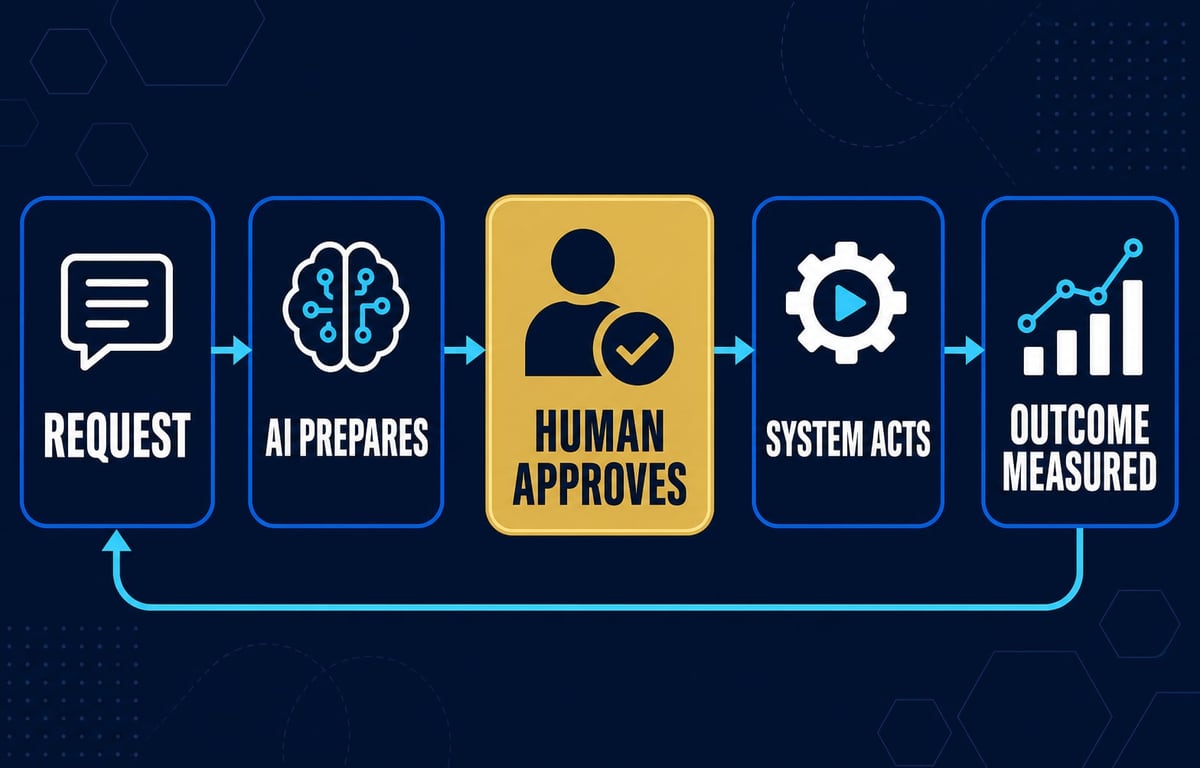 Source-backed analysis
What OpenAI's agent examples teach leaders about tools, data, computer use, handoffs, guardrails, tracing, and measurable workflow value.
Read the article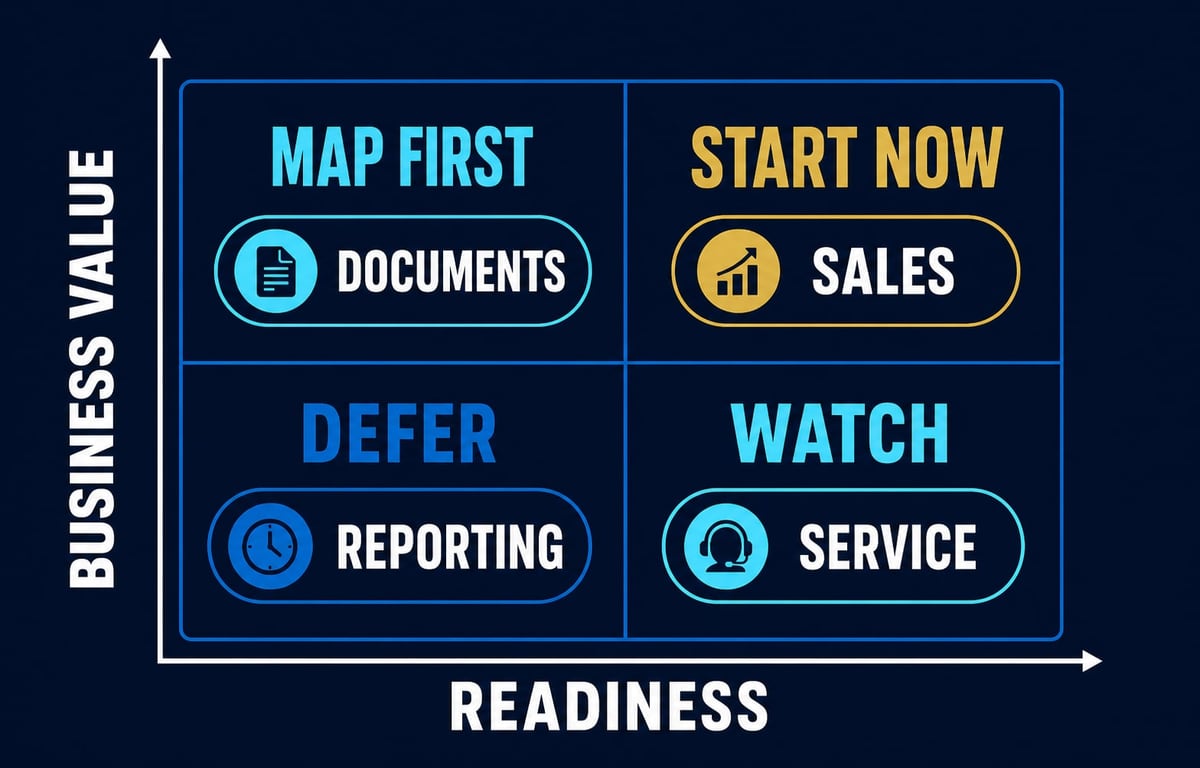 Small business AI
How small businesses can start with one useful AI teammate in support, sales, content, CRM updates, or customer knowledge.
Read the article Successful deployment of AI orchestration
Eight practical deployment patterns plus the self-improving workflow infographic: map the process, prioritize the first use case, design the operating model, and build a controlled pilot.
Read what we can build Small team adoption
Why the first AI workflow should be one narrow job, one visible workflow, one human owner, and one measurable business outcome.
Read the article Process architecture
What workflow orchestration teaches leaders about people, agents, robots, process visibility, and measurable operating performance.
Read the articleInvestment discipline
Connect the selected business outcome to workflows, people, agents, data, controls, and learning loops, then define the 30-day path to evidence.
Turn insight into action
The scorecard helps identify whether you need workflow clarity, opportunity prioritization, or implementation support.